
 Image 1 of 3
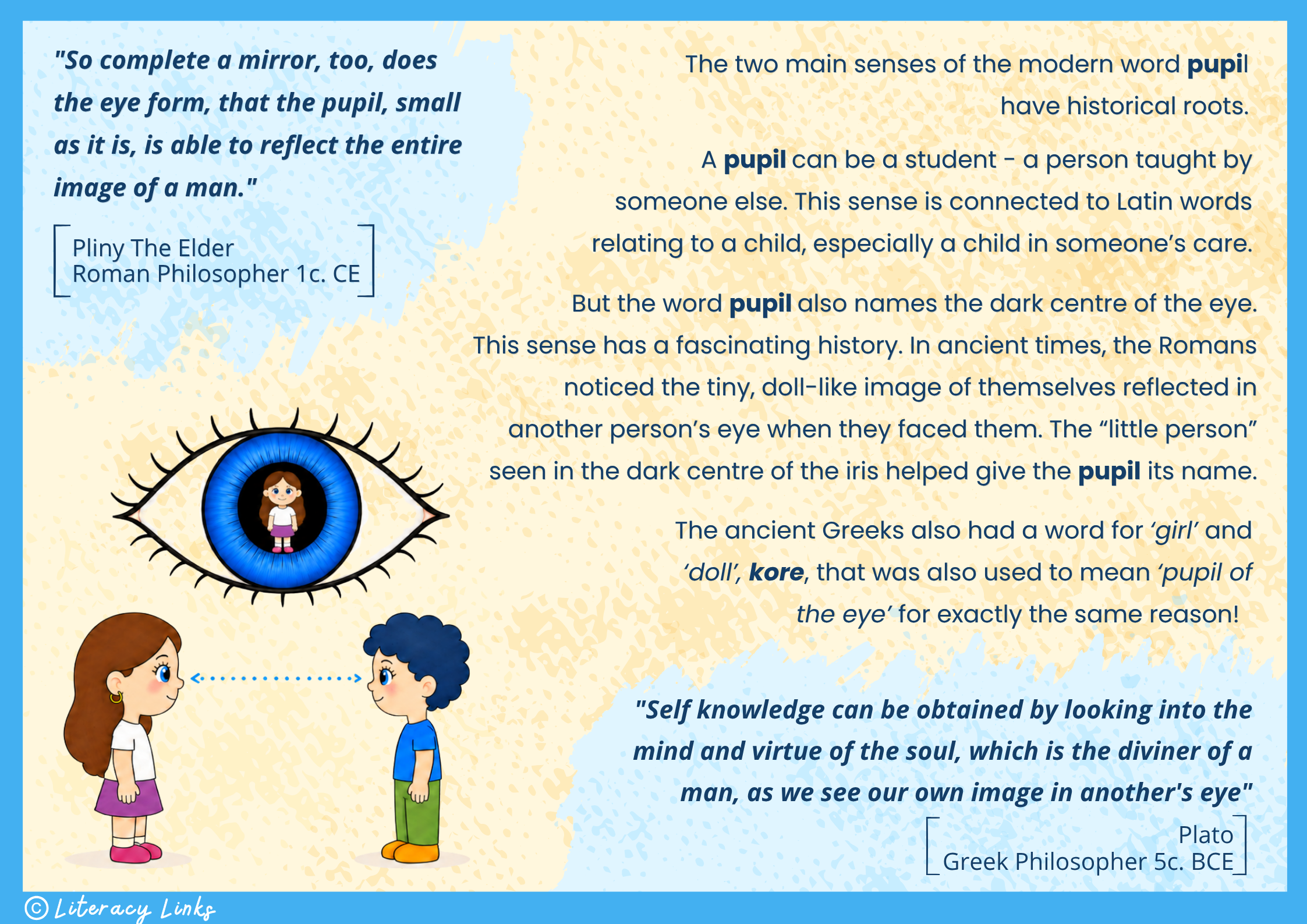 Image 2 of 3
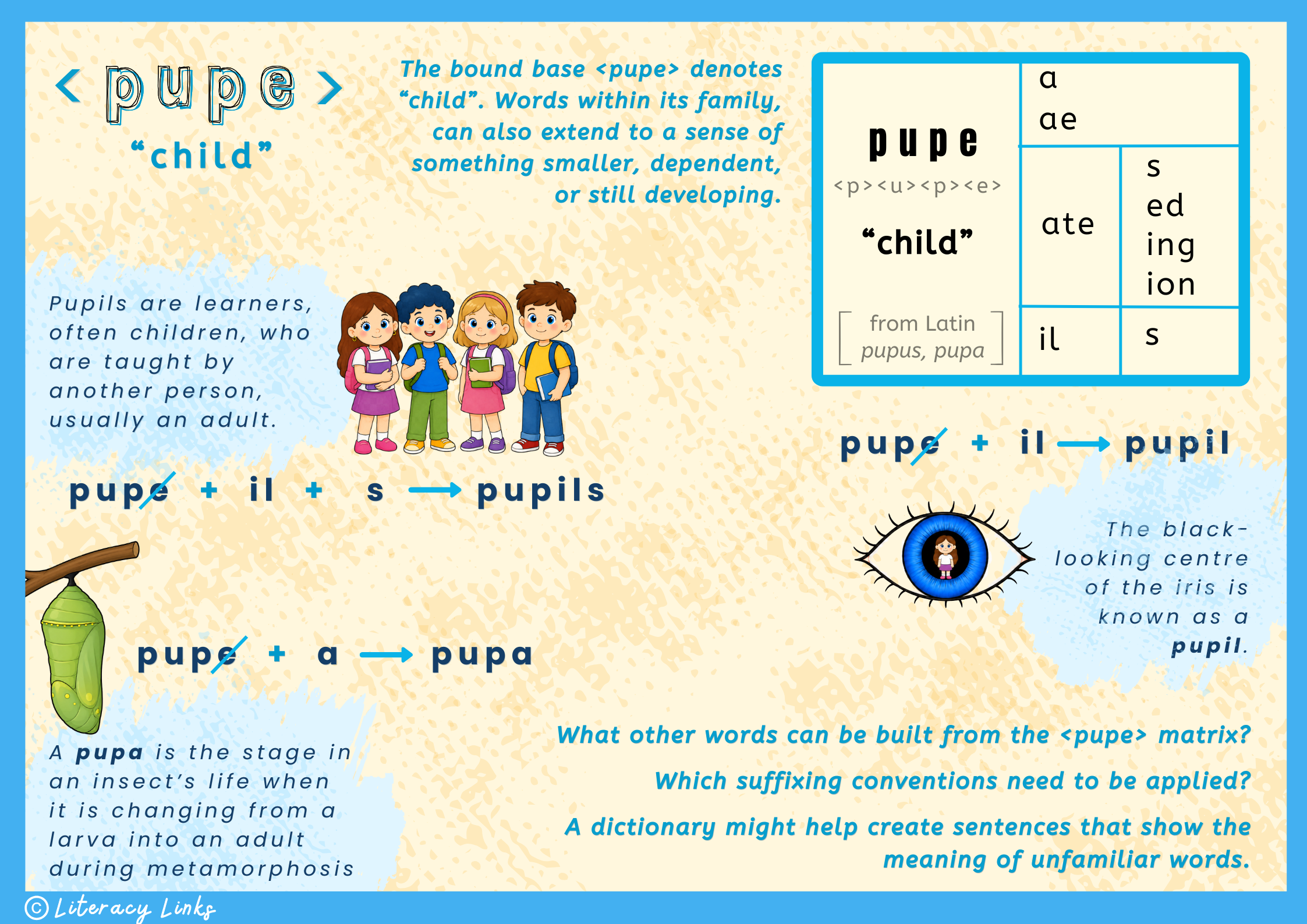 Image 3 of 3
Have you ever wondered why the word pupil can mean both
👩🏽🎓a student, and
👁 the dark centre of the eye?
At first glance, these two senses might seem completely unrelated.
❓ Are they homonyms?
❓ Are they related?
❓ How are they built?
This resource explores the word 'pupil' and and some of its more common relatives. It provides opportunities to build words, apply suffixing conventions, and build vocabulary.
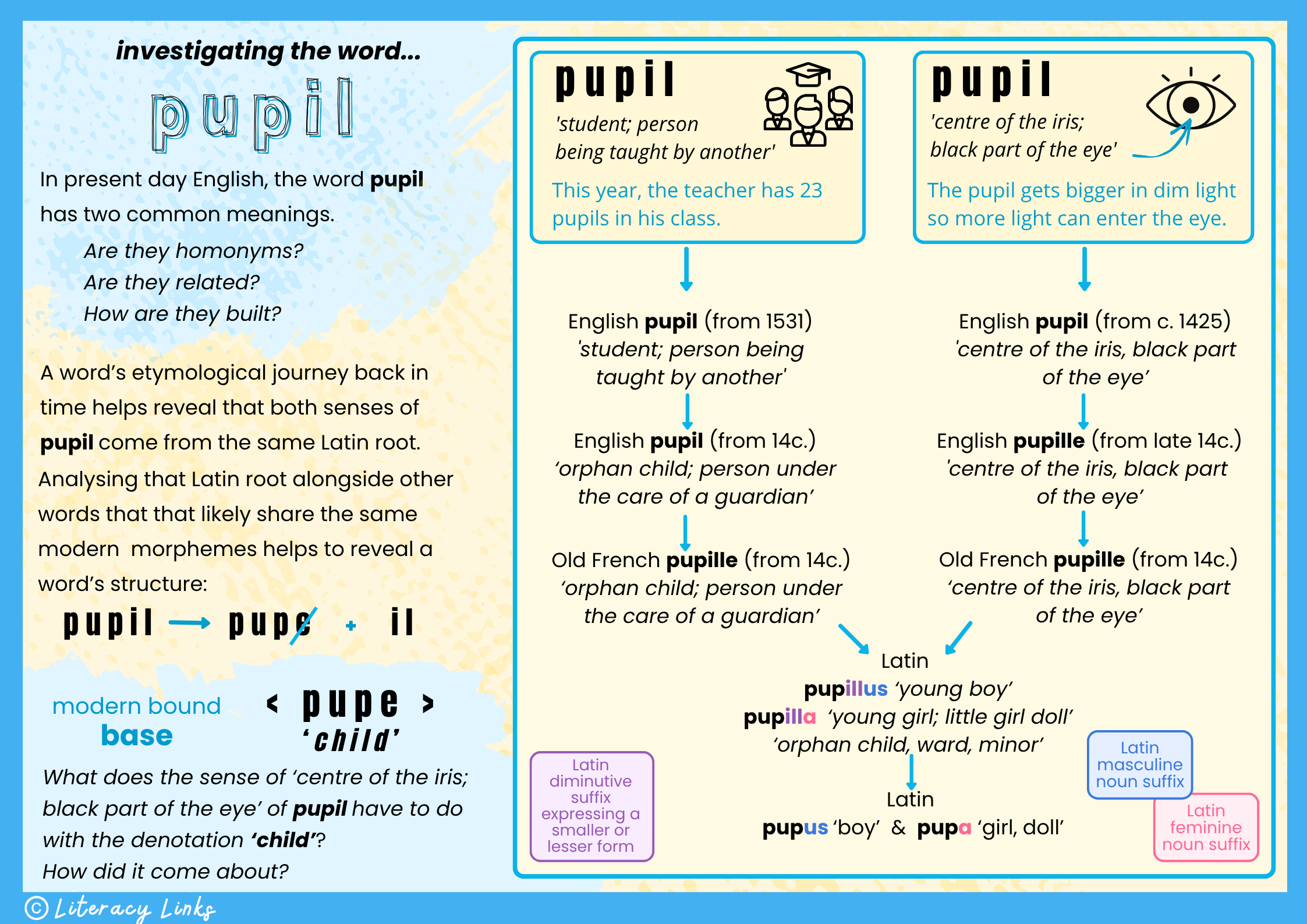
Both senses of 'pupil' can be traced back through French to Latin words connected with a child, especially a small child, a doll, or a child in someone else’s care. This helps us understand the sense of 'pupil' as a student — a learner, often a child, who is taught by another person.
But what does that have to do with the eye?
In ancient times, people noticed that when they looked closely into another person’s eye, they could see a tiny image of themselves reflected in the dark centre of the iris. That tiny reflected figure looked like a little person or doll. This “little person” helped give the 'pupil' of the eye its name.
This resources also introduces the modern English bound base <pupe>, denoting “child”. Words within its family, can also extend to adding a sense of something smaller, dependent, or still developing, for example:
<pupe> + <il> → pupil
<pupe> + <ae> → pupae 🦋
This is exactly why etymology matters in spelling instruction.
English spelling is not simply a code for sound. It is a system that represents meaning, structure, and history.
When students understand the orthography of a word like 'pupil', they begin to see that spelling is not random. It is ordered, meaningful, and rich with deep connections.
Note: As a lifelong learner, this resource reflects my current understanding of its content at the time I created it.
Have you ever wondered why the word pupil can mean both
👩🏽🎓a student, and
👁 the dark centre of the eye?
At first glance, these two senses might seem completely unrelated.
❓ Are they homonyms?
❓ Are they related?
❓ How are they built?
This resource explores the word 'pupil' and and some of its more common relatives. It provides opportunities to build words, apply suffixing conventions, and build vocabulary.
Both senses of 'pupil' can be traced back through French to Latin words connected with a child, especially a small child, a doll, or a child in someone else’s care. This helps us understand the sense of 'pupil' as a student — a learner, often a child, who is taught by another person.
But what does that have to do with the eye?
In ancient times, people noticed that when they looked closely into another person’s eye, they could see a tiny image of themselves reflected in the dark centre of the iris. That tiny reflected figure looked like a little person or doll. This “little person” helped give the 'pupil' of the eye its name.
This resources also introduces the modern English bound base <pupe>, denoting “child”. Words within its family, can also extend to adding a sense of something smaller, dependent, or still developing, for example:
<pupe> + <il> → pupil
<pupe> + <ae> → pupae 🦋
This is exactly why etymology matters in spelling instruction.
English spelling is not simply a code for sound. It is a system that represents meaning, structure, and history.
When students understand the orthography of a word like 'pupil', they begin to see that spelling is not random. It is ordered, meaningful, and rich with deep connections.
Note: As a lifelong learner, this resource reflects my current understanding of its content at the time I created it.